|
Culture - La Paz
La Paz is a hustling and bustling city that rises with the sun and doesn't calm down until hours after sunset.
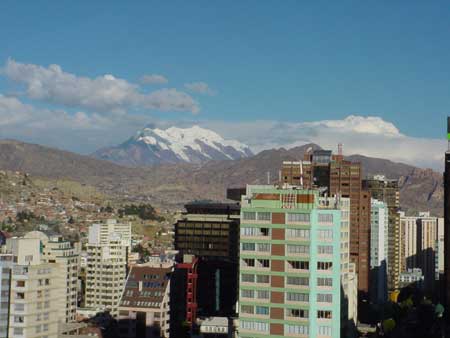
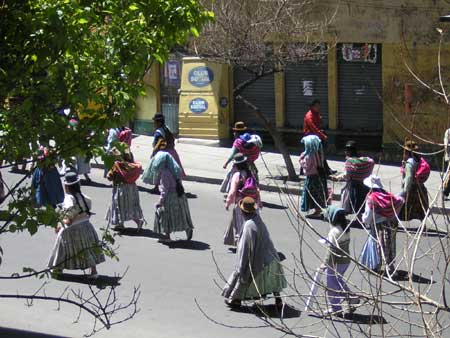
"La Paz is a unique mix of traditional and contemporary cultures. It's not uncommon to witness an Incan woman in traditional dress scurrying down the cobbled sidewalks in the shadows of a glass-paned high rise. - Bobby Gillis
For us, riding the bus from the airport in El Alto into La Paz was an experience as stirring as some of the people we would encounter during our trek across the Bolivia. Culturally, La Paz is incredible, with a new reason to widen your eyes around every corner.
Crossing the street in La Paz during the day is somewhat like being trapped in a Frogger game: you find yourself dodging between vehicles and halting suddenly for cars that seem to pop out of nowhere. Unlike the U.S., pedestrians DO NOT have the right away.
Driving is quite an obstacle as well. One of the most interesting taxicab rides in the world could very well take place in La Paz. After all, a city that has few stoplights or signs and great distances in between can call for a congested road. Now imagine a road with virtually no vehicle lanes, and those that exist are worn and certainly not observed. Honking the car horn is a Bolivian warning to move out of the way and clear the intersection. Mini-bus taxis attract customers by one guy hanging out the side window, yelling their destination and price.
Even though the city streets are fast paced and keep you on your toes, the people are friendly and welcoming. Bolivians love to talk to "gringos" and hear about their journeys.
"I was surprised how safe I felt in this large city of millions of people." - Mary Kairouz
Throughout La Paz, vendors cover the streets, selling food and water, and other items. Bolivians crave nothing more then a hot lunch, so during the noon time hours is probably the best time to scope out the variety of dishes that are being served. Our La Paz dining experience held to Alexander's (a modern coffee shop in the middle of the city with chocolate cheesecake!) for breakfast and Mongo's for dinner, where you can not go wrong with a blue cheese burger and fries. An ice cream craving in the middle of the day never went unsatisfied, because Dumbo's didn't have an ice cream flavor we didn't enjoy.
On a slightly less positive note, watch out for water, ice, vegetables, fruits, and some other food items that may tempt your tummy, but could make you sick. Just ask - oh, most of our group (not Brian, though). To boil it or to buy it bottled is the safe way to go.
In the markets, no price is set in stone, bartering is always an option, and usually saves you a few Bolivianos. Be careful whom you make eye contact with - because to some, eye contact is the first step to a sale, and they WILL chase you down the street.
"There is excellent shopping around the city, especially at the witches market where you can buy love potions and other necessities." - Stephanie Briggs
|
Culture
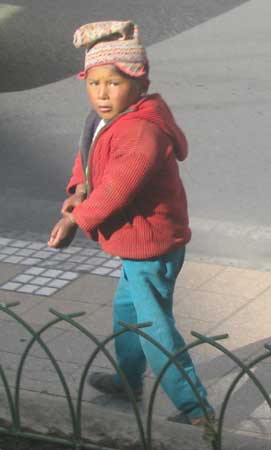
Bolivian boy walking down the street in La Paz (More Culture!)
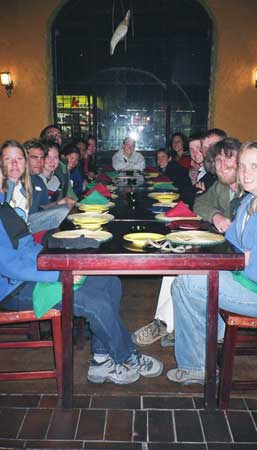
Last dinner in La Paz
|