Teaching

I spent much of my time during the '01/'02 academic year at the Adler Planetarium developing a workshop for Chicago-area high school students. I was in charge of every detail of the program, including curriculum development, organizing guest speakers, and arranging for use of classrooms and other facilities. I built the curriculum around Solar Astronomy, which is why I included the above SOHO picture of the Sun. I developed a lab that required the students to build their own table-top spectrometers, complete with optical sensors, during the first 3 weeks and use them to measure the temperature of the solar blackbody in the final week. The project was a success; by the end of the four-week program the students were able to carry out their measurements and explain the process to their teachers and parents (many of whom didn’t know the science behind what we were doing).
This was also the first year the program restarted after a gap of several years. I’m happy to say it is still running, with much the same structure that I developed that summer, albeit with different curriculum.
Soon to come -- I will post my curriculum here...
38th Astro-Science Workshop Adler Planetarium & Astronomy Museum
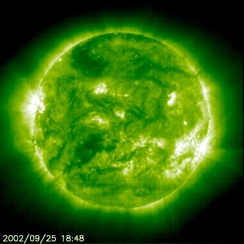
Image credits: NASA/JPL
Climate dynamics on Earth and other planets: An introduction to fundamental radiation and
thermodynamics in the atmospheres of Earth, Mars, and Titan
Duties: Lectured occasionally as a substitute
Led help sessions for weekly homework sets
Graded homework sets and laboratory reports
Mathematical methods and dynamical systems: analytical and numerical methods for ODEs, PDEs,
discrete maps, stability analysis, and chaos
Duties: Led help sessions for weekly homework sets
Graded homework sets and laboratory reports
Global warming: a class on the basic physics of the greenhouse effect
Duties: Facilitated lab in which students performed global climate change scenario forcasting using
state-of-the-art 1D climate models
Graded laboratory reports and exams
The Milky Way: An introduction to the contents and structure of our galaxy
Duties: Facilitated a laboratory in which students measured the ages of open clusters with
observations made by them with a remotely controlled telescope facility at Yerkes
Observatory
Graded laboratory reports and homework sets
Classes I’ve TA’ed
Each summer, a group of Chicago youth, the Space Explorers, spend a week at Yerkes Observatory in Williams Bay, WI. During the week, students perform hands-on laboratories related to a theme that they have studied in workshops during the school year. A few years ago, I co-taught a class in which the students used daytime photos of the moon that they took with a telescope to measure the distance to the moon. The approach involves taking several images of the moon during the time that it is visible, and relating the change in it’s apparent size to the size of the earth. This document contains the full write-up of the lab, which was developed by Prof. Rich Kron. The students successfully learned how to use telescopes, analyze and reduce images using software, and the geometry necessary to make the final calculation with their observations.
Statement of Teaching Interests PDF
AOS101 & 200A: Atmospheric Dynamics & Thermodynamics (syllabus)
ESS200B: Oceans & Atmospheres (syllabus)
ESS229: Planetary Atmospheres (syllabus)
AOS3: Introduction to the Atmospheric Environment