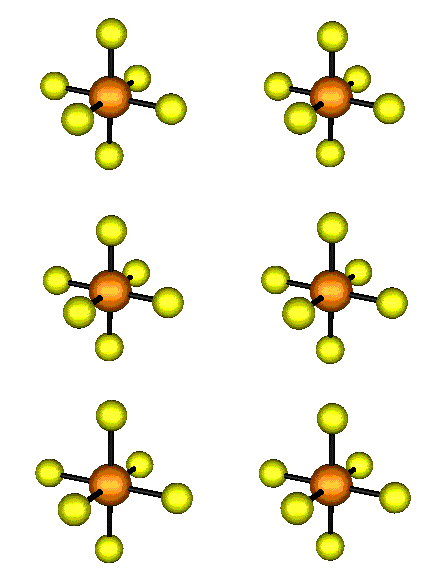
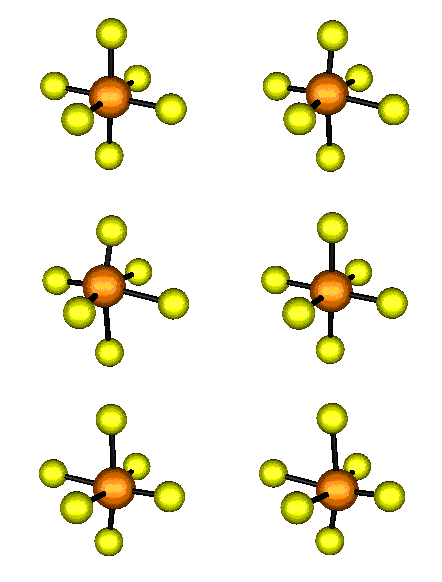
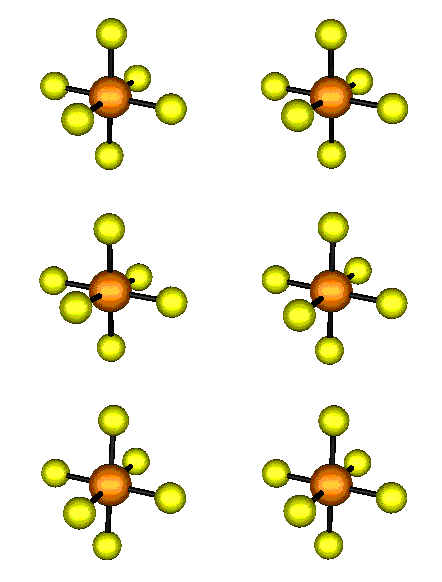
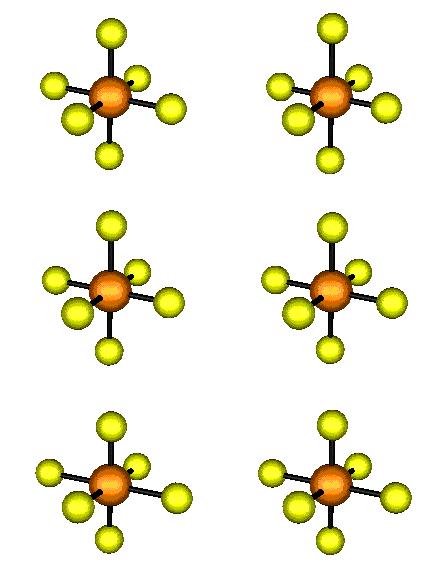
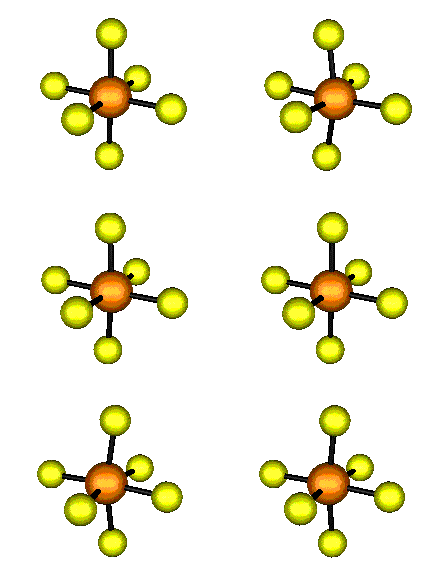
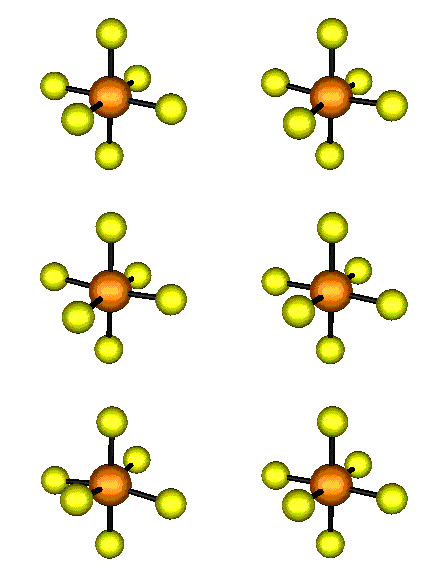
Normal Modes of SF6 (octahedral - Oh symmetry)

SF6 (sulfur hexafluoride) is an extremely inert octahedral molecule. This inertness, along with its high molecular mass and non-polar structure, have made SF6 an economically valuable electrical and thermal insulator, particularly in electrical transformers. Atmospheric release of this molecule is rather minor (~600 tons/year), but the very high estimated mean lifetime in the Earth's atmosphere (3,200 years) has led to an increase in abundance to ~0.004 ppb in 1998. This overwhelms a small natural source of SF6 from fluorite deposits, and contributes approximately 0.002 Watt/m2 to anthropogenic greenhouse forcing. Molecule for molecule, SF6 is among the most potent greenhouse gases, 22,200 times more effective than CO2, but it is so rare that the present impact is small. The vibrational normal modes shown below were calculated with the B3LYP hybrid density functional and the 6-31G(d) basis set.  ν3 and ν4 are the only modes that interact with infrared light, the other vibrational modes do not contribute significantly to the greenhouse effect. Experimental frequencies are from Chapados and Birnbaum (1988, J. Mol. Spectrosc. 132:323-351)

ν1 (A1g) - Symmetric Stretch
774.55 cm-1

 ν3 (F1u) - Stretch
947.98 cm-1

ν5 (F2g) - Bend
523.56 cm-1

ν2 (Eg) - Stretch
643.35 cm-1

 ν4 (F1u) - Bend
615.02 cm-1

ν6 (F2u) - Bend
348.08 cm-1

Go to Molecular Vibrations